Why Hellraiser: Judgement almost worked for me.
06/26/2026
Prior to watching Hellraiser: Judgement, I had only watched the first three films in the franchise. I found the first two films absolutely brilliant, with the third having a significant fall off in quality. After hearing almost nothing but bad things of the remaining sequels, I had opted for a long time not to even bother.
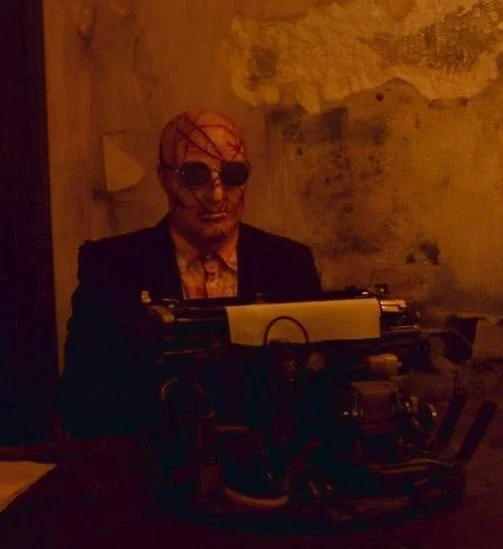
Until I came across a scene from Hellraiser: Judgement on YouTube, that is. The scene showed a man with a scarred face and black goggles sitting at a typewriter in discussion with a man about some of the horrific things said man has done in his lifetime. The overall tone was dark and ominous, with the viewer already knowing that torture and hell await (It is a Hellraiser film after all). What sold the scene was the voice and mannerisms of the scarred guy at the typewriter (“The Auditor”). His dialogue was largely polite, and the sound of his voice was reassuring, a stark contrast of the dingy room and inevitable future.
This scene hooked me, and I made a decision to watch the entire film.
The overall tone and concept of the film were both dark and compelling. The main character is Detective Sean Carter, a conflicted man thanks to his previous life in the military. Alongside his brother, he strives to solve the case of a serial killer, a case he is getting a bit too close to. This provides the bulk of the character and plot development for the film. I can’t offer much more info without spoiling it. It created some dark and intense moments, but unfortunately, this really was as deep as the story went.
The characters were ridiculously simple. In fact, so simple it began to feel like a bland, watered down CSI episode where the viewer likely feels nothing for any of them. The mystery of this serial killer is the only thing driving the movie forward. It sort of works, but if the film had fleshed out the characters more, it would have had a tremendously larger impact.
The scenes in hell, which focused on The Auditor, Hell Priest (Pinhead), and the Jury (a group of naked women deciding the fate of those The Auditor meets with), hold a lot of promise. The tension of these scenes is through the roof, but I felt like they led to an underwhelming place, particularly in the opening scene of the film. Yes, The Auditor gathers the horrible things his victim has done in his life, and he does submit it to the Jury who decides his gruesome fate. We then shift to his torturous punishment, and that is where the disappointment for me comes.
For the majority of the torture scene, it cuts away from the actual torture and gore and we are left to see the man’s tormentor swinging blades while the man is screaming. It doesn’t show much. I understand that sometimes it’s what you don’t see that is the most frightening, but for this film, the full discomfort of the viewer falls short. We need to see the violence up close and personal and for our attention to be held there unwillingly to get the full effect. This is a Hellraiser film, as mentioned. There were a few other scenes with the same issue.
At just 80 minutes, Hellraiser: Judgement never gives its best ideas enough room to breathe. More time could have deepened the characters and lingered on the unsettling horror the film repeatedly hints at but rarely commits to.
The tragedy of Hellraiser: Judgement isn't that it's bad. It's that buried beneath its rushed execution is a genuinely fascinating horror film that never quite emerges.
Score: 6/10